Fells Happenings – Fall 2024

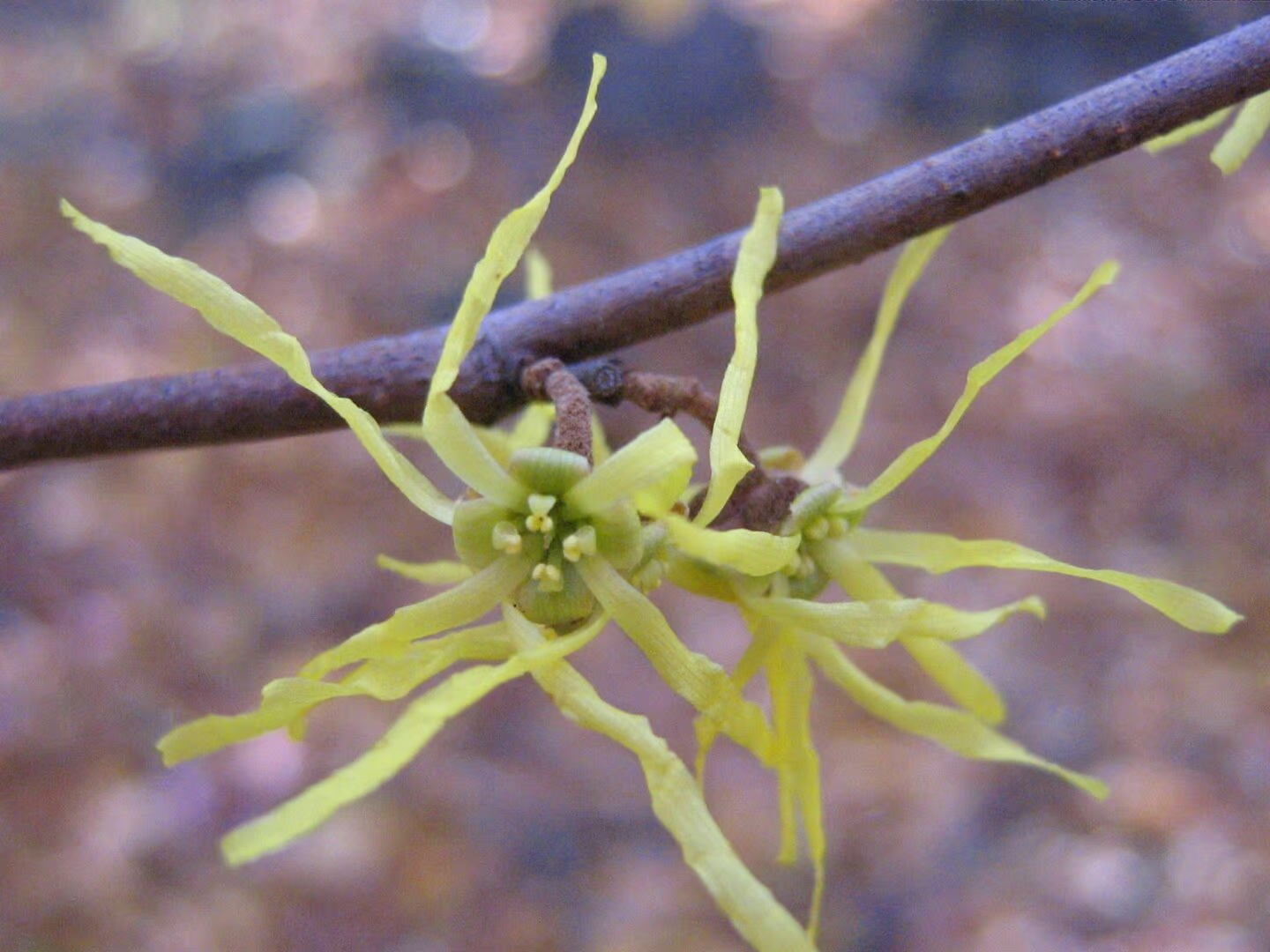
Witch Hazel.

by Niti Seereeram

Fall is here in the Fells! Also referred to as the season of change, fall boasts many wild happenings as we transition from the hot, bright summer days to the cold, dark winter. From eerie witch hats to vibrant tree foliage, fall has many features to display as you hike the trails. Read on to learn about what’s happening this season.

The perfect plant for spooky season, witch hazel is a favorite in the Fells for its unique light yellow flowers with long, thread-like petals. Witch hazel has a late blooming season with flowers appearing starting late October to early November. Take a deep breath in and note their spicy, citrusy scent.

Witch hat gal.

After admiring the flowers, search for witch hat galls on the leaves! These pointy witch hat-looking extrusions are the result of the aphid, Hormaphis hamamelidis. This aphid lays an egg on the witch hazel leaf, which reacts by growing the conical “witch hat” gall around the disturbance. After its growth, the aphid exits out of a hole on the bottom of the leaf. This interaction is an example of symbiosis in which neither the witch hazel or aphid are harmed in the process.

Hawk. Photo by Mary H. New.

While a nuisance for humans, poison ivy is an important native plant with many benefits, including providing a nutritious source of food for our local birds during fall and winter! Poison ivy berries first appear in the summer as clusters of small, circular, green fruits. As the berries ripen throughout August and November, they turn whitish-yellow and become waxy. They then serve as a delicious feast for hungry birds during the harsher, colder seasons. Over 50 species of birds have been observed eating poison ivy berries, including Fells natives like chickadees and robins!
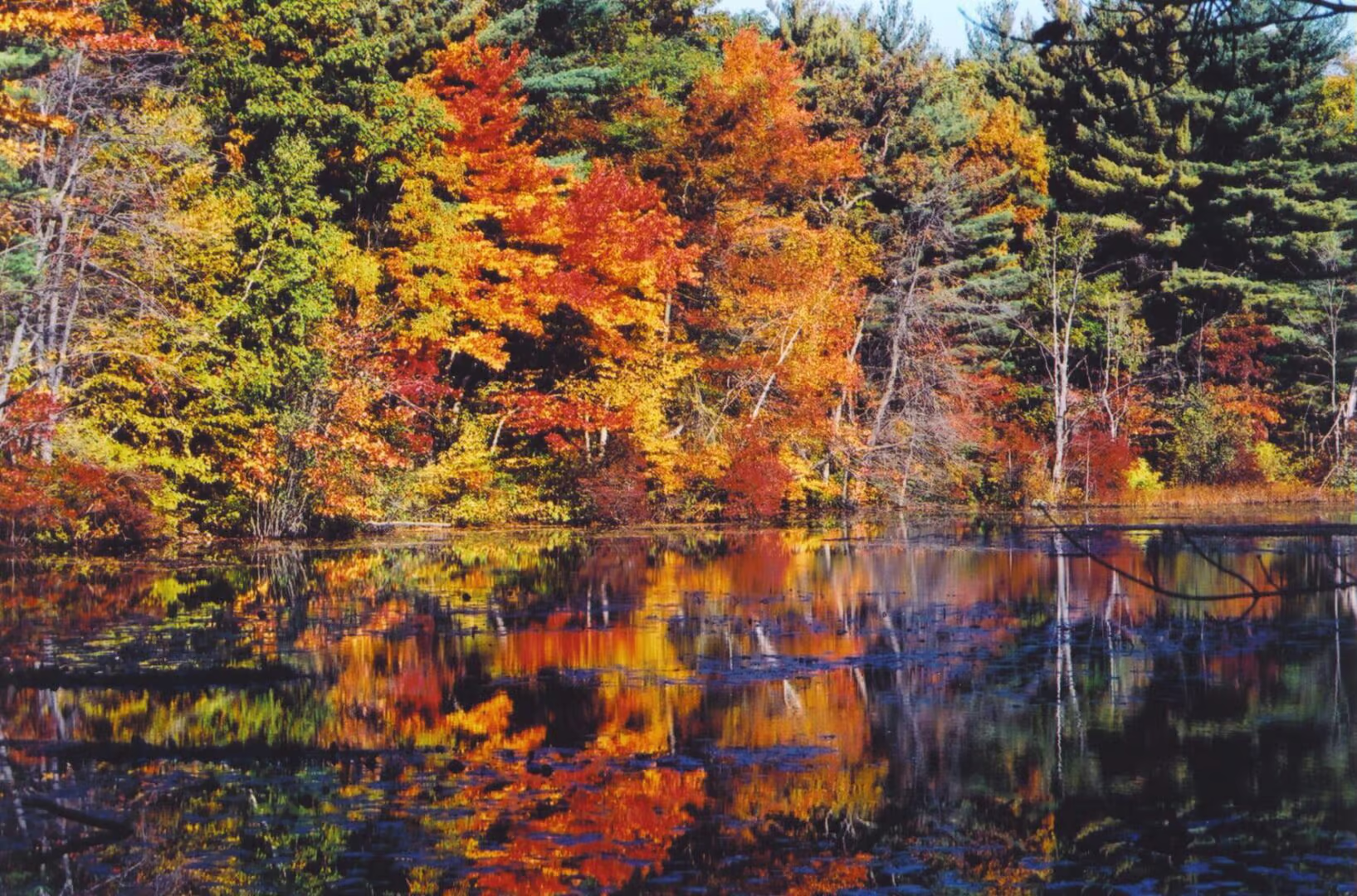
Long Pond in Fall. Photo by Mike Ryan.

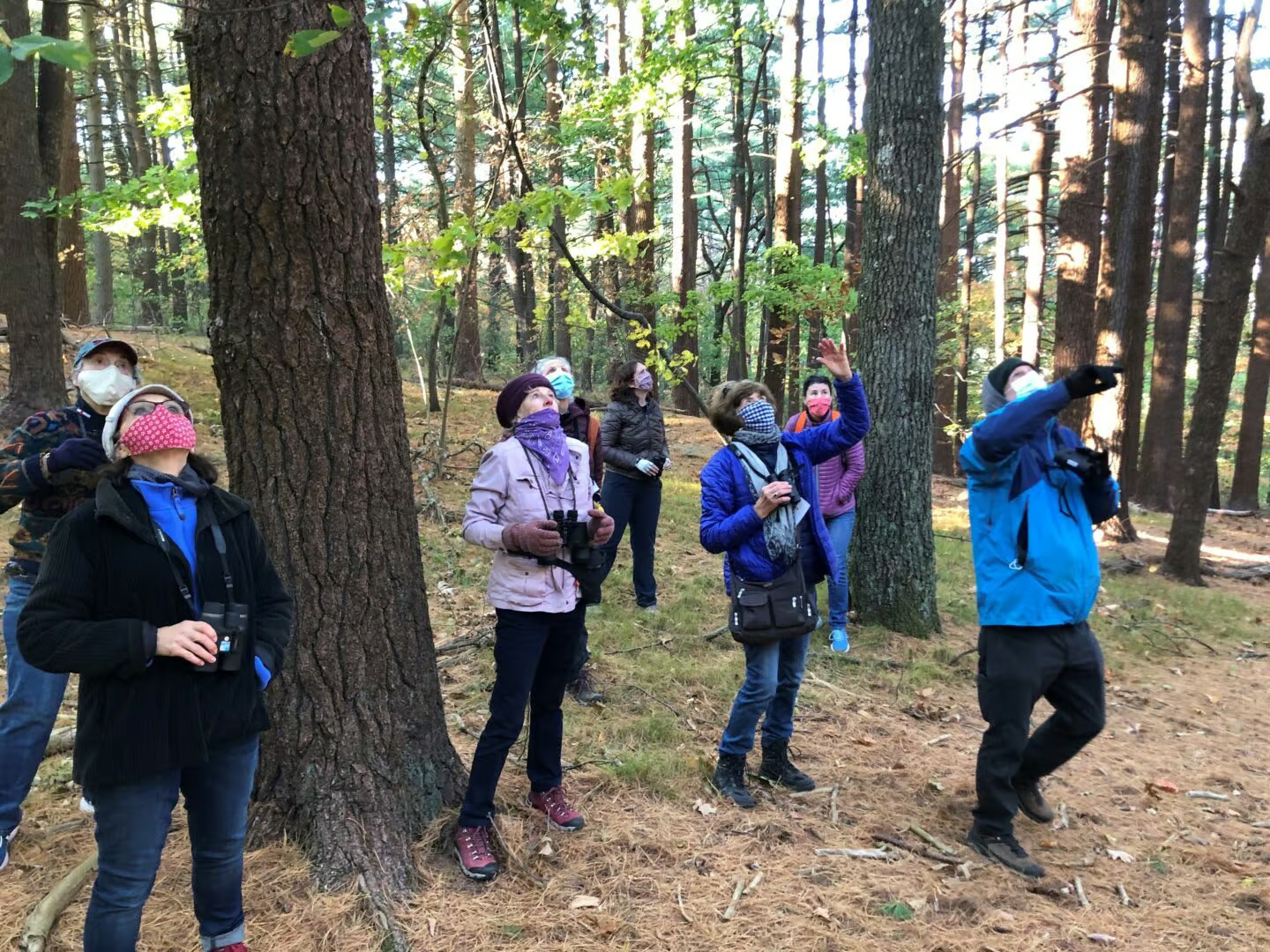
Fall is a great time for birding. As birds migrate south for the winter, many stop by the Fells for shelter and a snack. Warblers, hawks, and geese commonly appear during this time of year. Listen closely for the birds’ unique songs, such as the meow-like call from the grey catbird.

Perhaps the most exciting part of the season is in its name: fall! As we move into the darker months, you will observe leaves turning beautiful shades of red, orange, yellow, and brown as they lose their chlorophyll and prepare to drop for the winter. Be on the lookout for scarlet red maple leaves, golden hickories, and copper oaks as you traverse through the Fells. Don’t forget to bring your camera and send us photos of what you see at friends@fells.org!
by Kyle McGrath

November is National Native American Heritage Month. To celebrate, we are looking into some of the history of the Middlesex Fells and indigenous peoples’ experiences in the Fells. Learn more about some of the recorded history below.

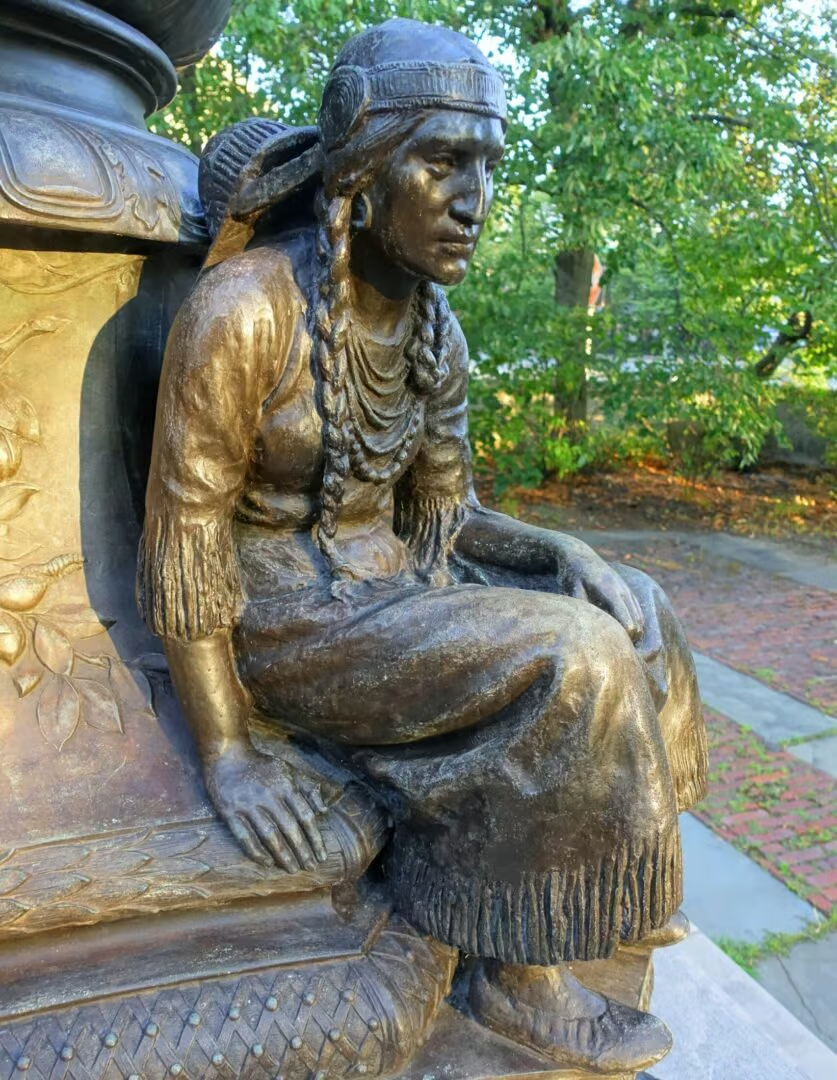
Squaw Sachem of Mistick statue in Arlington, MA.

1614: Captain John Smith explores the Massachusetts Bay and documents an estimated 3,000 Massachusett living in 20 settlements around Boston Bay. These people have a wide-ranging network of trade and diplomatic ties with neighboring tribes and confederations, a system of land ownership with lands set aside for hunting and agriculture, and a political structure centered around hereditary rulers, or sachems.

1617-1619: An epidemic, probably smallpox spread by European traders, kills up to 90% of the Massachusett population, causing the abandonment of many settlements.

1619: Nanepashemet, sachem of the Massachusett and leader of the Pawtucket Confederation that controls the area now comprising the Middlesex Fells, dies in battle with a rival tribe, possibly the Mi’kmaq. Leadership of the confederation passes to his wife, the “Squaw Sachem of Mistick (Mystic)”, whose given name is not known, and his three sons, Wonohaquaham or “Sagamore John,” Montowampate or “Sagamore James,” and Wenepoykin or “Sagamore George.” Sagamore John resides in Medford and later becomes known for adopting English language and dress, aiding the colonists, and attempting to use the English court system to resolve legal disputes with mixed success.

1628: The Council for New England, the English joint stock company responsible for the colonization of North America, grants the land between the Charles and Merrimack Rivers – already home to thousands of native people – to a company of investors, later the Massachusetts Bay Company, for colonization. Governor John Endicott lands with the first band of colonists at Naumkeag, later renamed Salem.

1629: King Charles I grants a royal charter to the Massachusetts Bay Company, formally creating the legal basis of the Massachusetts Bay Colony.

1630: The “Winthrop Fleet,” carrying 700 colonists led by John Winthrop, arrives in Salem. Winthrop takes over for Endicott as Governor of the colony.

1632: In winter, John Winthrop explores the area of the Middlesex Fells, then the territory of the Pawtucket Confederation. Winthrop gives Spot Pond its name, after the many rocks and small islands he sees poking up from the pond’s frozen surface.

1633: A smallpox epidemic devastates the Pawtucket Confederation, leaving only a few hundred alive and killing two of Nanepashemet’s sons, Wonohaquaham and Montowampate. The Squaw Sachem and his surviving son Wenepoykin are left to rule a much reduced band. 17-year-old Wenepoykin is badly disfigured by the disease, leading to his nickname “George No Nose.”

1639: The Squaw Sachem deeds a large tract of land, stretching from modern-day Medford Square to Salem, to the English colonists. The colonists pay in cash and trade goods and are additionally required to furnish her “a coate every winter while shee liveth.” This territory includes the present-day Middlesex Fells Reservation.

1644: The Squaw Sachem places her people under the jurisdiction of the Massachusetts colony, ending their political independence.

1645: The first English farm is constructed near Bear Hill.

1650: The Squaw Sachem dies.

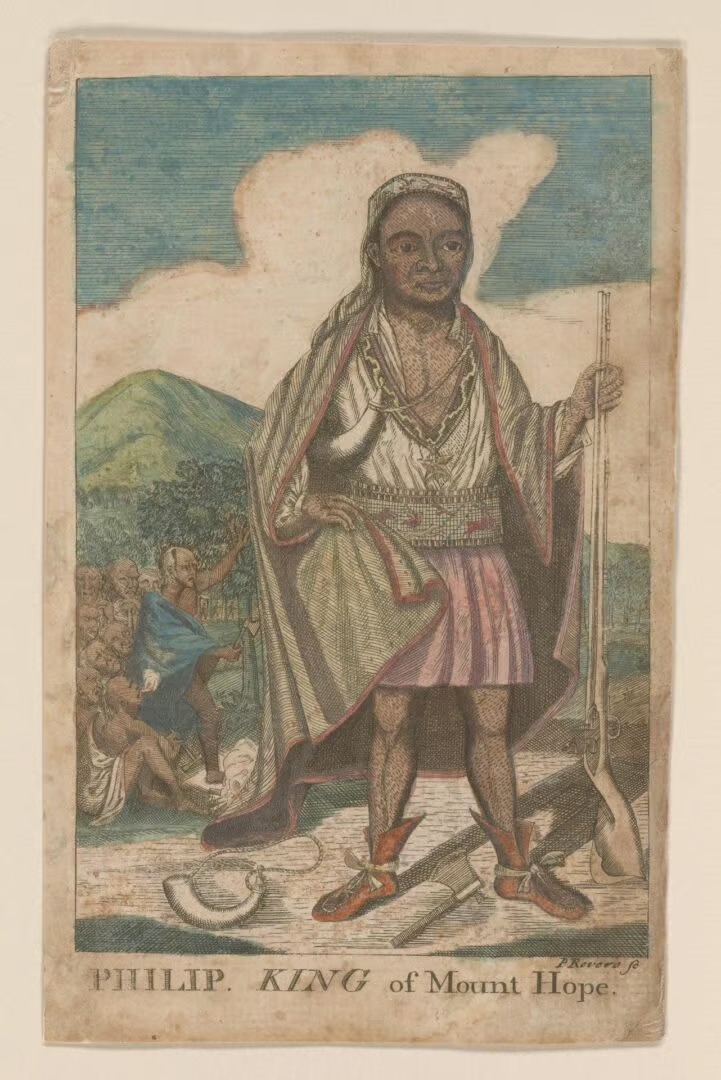
1675: Metacomet or “King Philip,” chief of the Wampanoags and son of the great sachem Massasoit, leads an alliance of tribes against the English colonies. The war is caused in large part by unequal treatment of Natives in the English legal system. After years of unsuccessful efforts to re-assert ownership of his land in the English courts, Wenepoykin, the youngest and only surviving son of Nanepashemet, joins King Philip’s side in the war.

1676: King Philip’s War ends with the defeat of the Wampanoags and their allies and the death of King Philip. English dominance in Massachusetts is firmly established. Like many on the losing side, Wenepoykin is sold into slavery in Barbados.

1684: John Eliot, the Puritan missionary who also translated the Bible into the Massachusett language, secures Wenepoykin’s release from slavery and returns him to the “Praying Indian” town of Natick, MA. Having returned home, Wenepoykin, last son of Nanepashemet, dies in Natick in September of 1684 at the age of 68. He deeds all his remaining land to his successor, Quonopohit or “James Rumney Marsh,” in whose house he stayed until his death. Most of this land is sold off by the end of the 1680’s.

Sources

Bradford, William and Winslow, Edward (1865). Mourt’s Relation, or Journal of the Plantation at Plymouth. Boston: J. K. Wiggin.

Chapman, Henry Smith (1936). History of Winchester, Massachusetts. Winchester: Town of Winchester.

Gleason, Hall (1921). The Indians of the Mystic Valley and the Litigation over Their Land. Medford Historical Register 24 

Heard, Duane Hamilton (1890). History of Middlesex County, Massachusetts. Philadelphia: J.W. Lewis

Thatcher, Benjamin Bussey (1839). Indian Biography. New York: Harper

Winthrop, John (1908). Winthrop’s Journal “History of New England” 1630-1649. Massachusetts: Scribner

Resources

Check out Outdoor Learning’s list of Indigenous Learning Resources and Opportunities here.

The National Native American Heritage website can be found here.

The Bureau of Indian Affairs webpage celebrating the month can be found here.

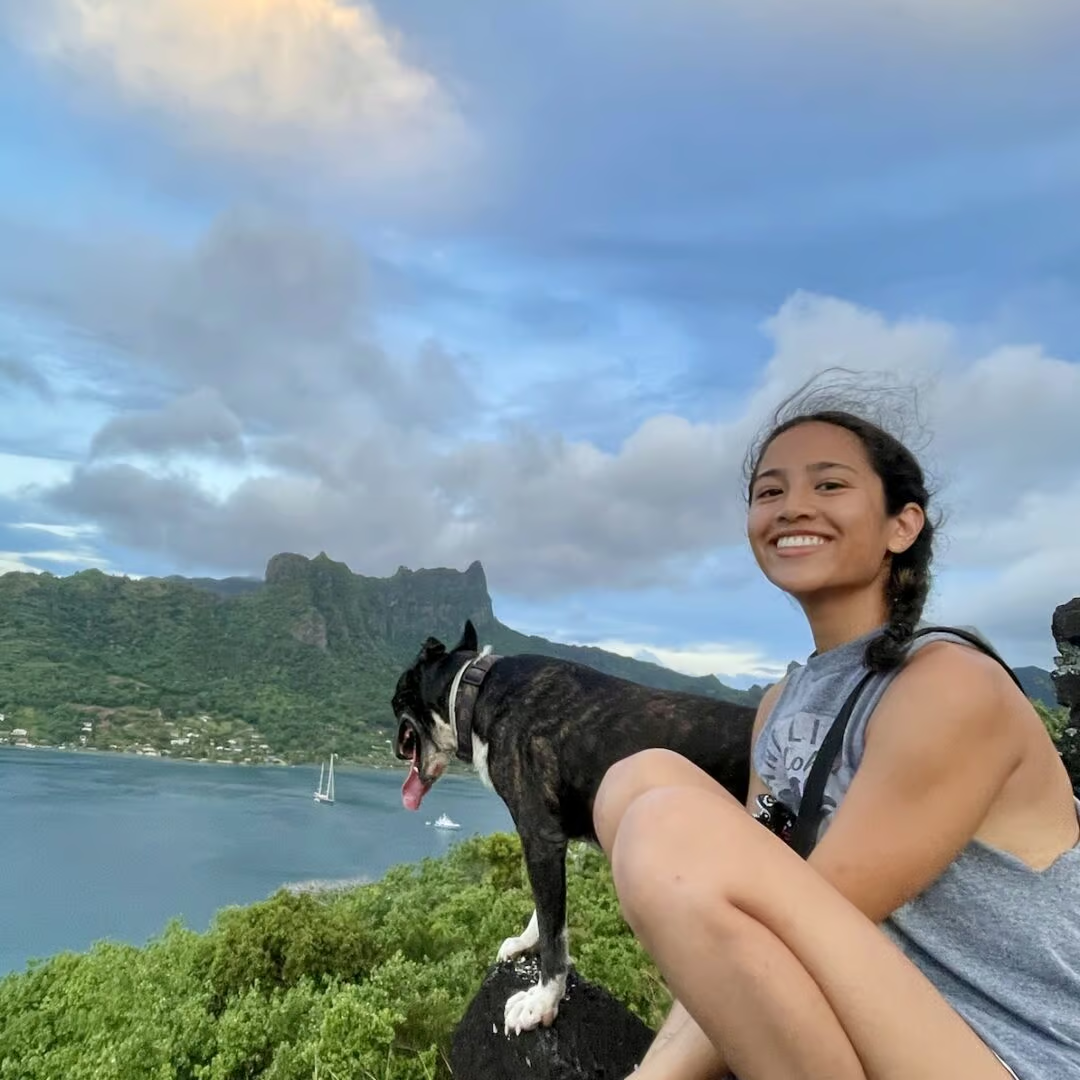
Friends of the Fells is thrilled to welcome and introduce Niti Seereeram, the 2024-2025 Land Stewardship Coordinator. Niti is serving with Friends of the Fells as a TerraCorps member. TerraCorps is an AmeriCorps service program that focuses on placing members with service sites that work with environmental, sustainable agriculture, and other conservation-related fields that help communities connect with their local environments.

Niti comes to Friends of the Fells with extensive experience in environmental education and conservation-related fieldwork. She recently graduated from UCLA with a degree in Ecology, Behavior, and Evolution. Before serving with TerraCorps, Niti worked in environmental education at Zoo New England and the New England Aquarium as a Seasonal and Conservation Educator.

When she’s not hiking the Fells, Niti enjoys baking, playing music, and tending to her freshwater shrimp tank. Niti is looking forward to meeting the Friends of the Fells community and sharing her love of the great outdoors!

Welcome to the Fells community, Niti! We are so excited to have you on board!

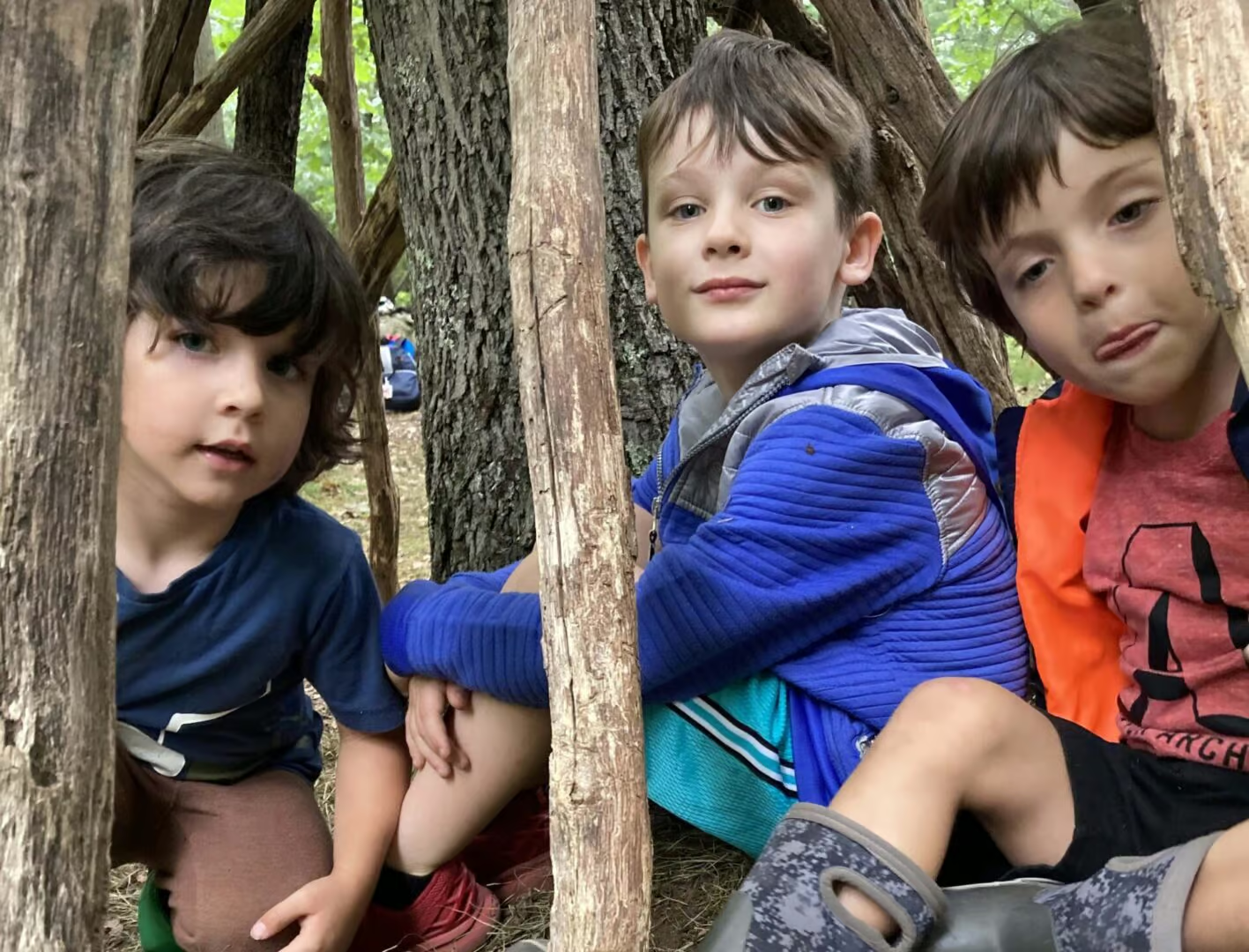
Over 500 campers explored the Fells this summer through unstructured, nature-based learning at Friends of the Fells’ Fells Forest Camp. Traversing rocky trails and pine needle-strewn forest floors, counselors and campers learned the importance of our woods, how to minimize our impact, and how all the natural elements we encounter are connected. As one parent said, “Fells camp is amazing! My kids love it every summer, and I love that they get such quality time connecting with nature. Since attending camp, my kids have mentioned nature facts to me that I hadn’t known before, so I’m learning too!”

Using the forest as their playground, camp staff worked with children in self-guided explorations which encouraged natural curiosity and inquisitiveness. Campers played games; spotted wildlife; and creatively developed storefronts where they sold wood, made mud, and built stone steps. Campers learned to communicate their ideas with their peers and to respect one another and the natural world.

This year’s camp season included eight one-week flagship sessions for kids ages 4-12 in addition to new science and art programs. Campers in the Art in Nature program learned to appreciate nature in new ways through sketching, painting, watercolor pencils, mosaics, and collage, culminating in a group mural project at the end of each session.

The science programs included two offerings: Science and Discovery and the Forest Up Close. In these programs, campers learned about the ecology of the Fells and how to observe nature and have scientific discussions while learning to think critically, share ideas, and disagree respectfully.

Also new this year was a two-week Counselor in Training program (CIT). The CIT program was designed for campers who had aged out of camp but were still too young to be counselors. During the CIT program, 13- and 14-year-olds received extensive leadership training while working with their peer cohort and gaining valuable experience working in camp groups. With support from their CIT Coordinator, CITs learned directly from camp counselors how to effectively lead a group of campers, confidently resolve conflicts, lead activities, and engage campers in nature.

“My child loved attending Fells Forest Camp. She felt safe and encouraged — to be playful, to be curious, to be daring, and to be herself.”

Camp registration for the 2025 season will open next year on Saturday, February 8th. Subscribe to our newsletter and follow us on Facebook for updates!

Photo by Colgan Johnson and The Great Malden Outdoors.

by Jaclyn Roth

Much of our lives are spent indoors. From household chores to relaxation, we often breathe in the same air and surround ourselves with the same walls. Working outside and interacting with nature is paramount to health and overall well-being.

The United States Environmental Protection Agency notes that the air we breathe indoors includes five times the amount of common organic pollutants found outdoors. Being outdoors improves the immune system. Plants produce chemicals with antifungal and antibacterial properties, and our bodies respond to these chemicals by producing white blood cells, which are essential in the fight against infections and viruses.

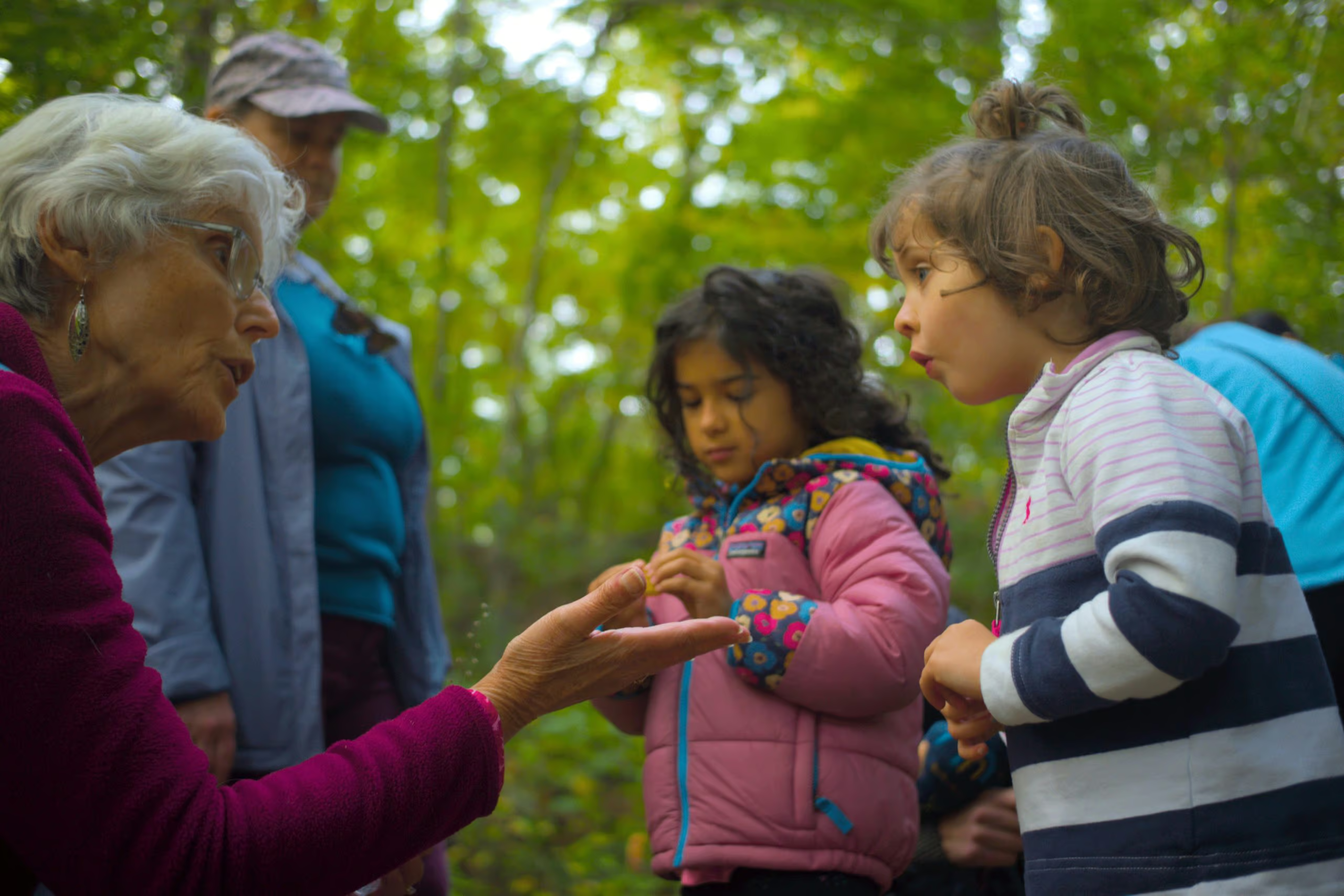
Participants of the Hike ‘n’ Seek explored the forest. Photo by Matvei Mozhaev. Instagram: @mozhaev_eye

Humans possess an innate biological connection to nature. Biophilia, a term coined by Edward O. Wilson in 1984, describes a desire to seek connections with nature and living things. It is why we gravitate towards the sunshine, gardens, and the ocean.

Richard Ryan, lead author and University of Rochester professor, said, “Nature is fuel for the soul. Often when we feel depleted, we reach for a cup of coffee, but research suggests a better way to get energized is to connect with nature.”

Connecting with nature balances the body. It provides a sense of calm and peace. It reduces anxiety and improves memory and focus. A University of Michigan psychology study concluded that memory performance and attention improved by 20% after individuals spent an hour outside and interacting with nature.

If you can’t seem to step away from work, try taking a meeting on the patio or on the go with a walk around the neighborhood.

Start your morning or break at lunchtime with a hike or guided walk in the Fells! Check out our calendar for upcoming events and reach out if you’re interested in leading a hike of your own. Want to take to the trails on your own? Check out our website to find a trail and get started.

Changes in air, temperature, and scenery throughout the day lead to enhanced sleep, increased creativity, and happiness. So try to make sure nature is a daily part of your routine!

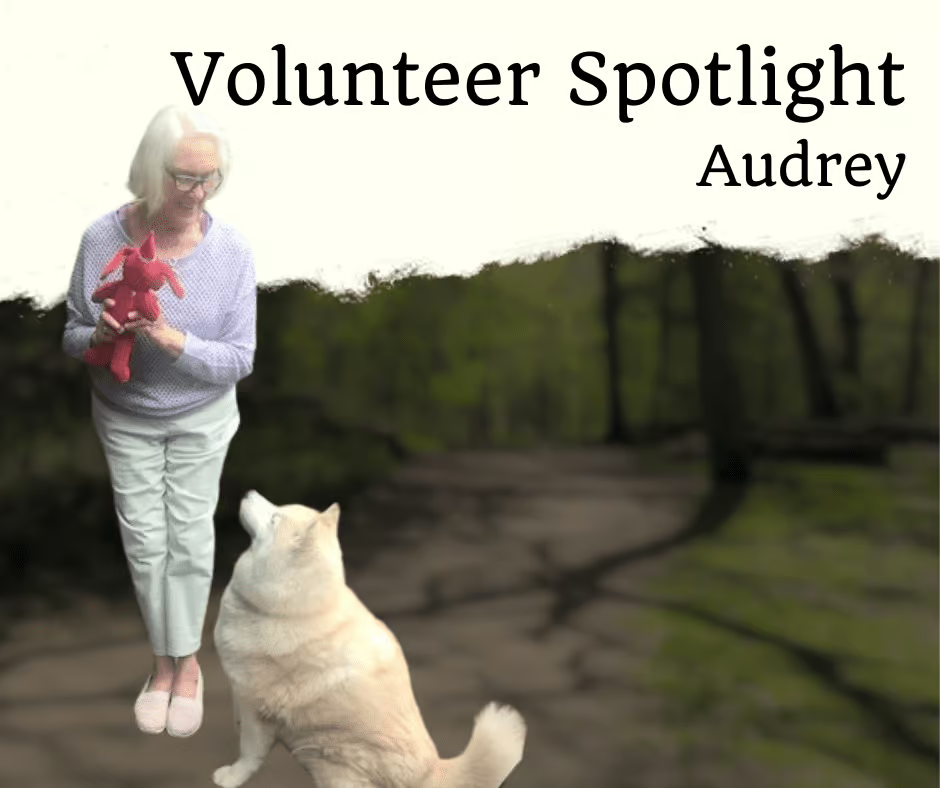
Audrey Killion

Originally from Cape Cod, Audrey Killion has lived in Winchester for 47 years. She graduated from Boston University with a degree in nursing and was a nurse and nurse practitioner for 55 years. Audrey has been retired for five years now and loves being out in nature.

Growing up on the Cape, she spent a lot of time in the woods, on the shore, and in the apple orchard in the backyard of her childhood home. Audrey’s mother and aunt knew a lot about the local flora and fauna and passed that knowledge onto her. “I did learn a lot growing up with my family who were always walking and saying ‘oh look there goes an Oriole’ or ‘there’s a hawk up in that tree.’ They knew their trees and plants and birds,” she explains.

Audrey has been a walk leader volunteer with Friends of the Fells for the last few years and has guided walks with Winchester Trails for 40 years. She leads walks on plants and the history of the Fells. History has always been one of Audrey’s favorite subjects, and she loves learning about all types of history, especially Native American and natural histories.

During the pandemic, Audrey and other Winchester Trails leaders took participants on socially-distanced bird watch hikes.

One of Audrey’s favorite memories in the Fells centers around a family of wood ducks. This spring she was out on a walk and saw a mother wood duck with seven babies paddling behind her. “They were almost walking over the water. They were cruising Long Pond trying to keep up with mother duck,” Audrey says.

For Audrey, the most valuable part of walk leading is getting people of all ages into the Fells. “Your job is done if you can get people out into nature. They can have that experience and that appreciation and [you can] encourage them to learn more,” says Audrey to anyone interested in guiding their own walk.

Thank you, Audrey, for all that you do for the Fells!

If you are interested in learning more and getting involved, please reach out to friends@fells.org, complete the Volunteer Application, or keep an eye on our calendar here for upcoming volunteer events.