
The 90mm Meadow Restoration Project is Friends of the Fells’ most ambitious conservation project to date. Its purpose is to preserve the most important pollinator habitat in the Fells, the 90mm Meadow located in Lawrence Woods near South Border Road, which is threatened by invasive plants, fragmented trails, and forest succession.
This work will restore and protect threatened habitat for butterflies and other native pollinators, birds, and meadow-dependent plants, as well as improve safety and trail conditions on the site.
This project is a multi-year ecological restoration effort led by Friends of the Middlesex Fells in partnership with the Massachusetts Department of Conservation and Recreation (DCR) and Essex Horticulture scheduled to begin in June 2026.
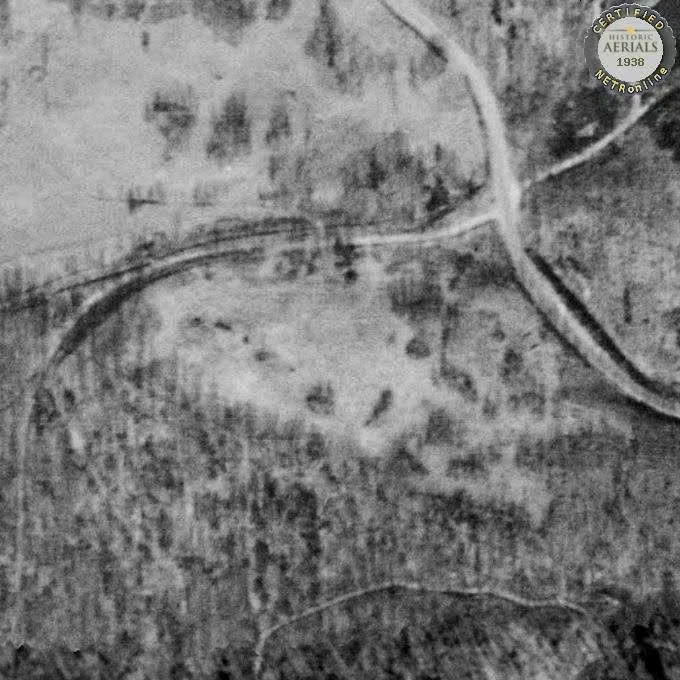

Note the four 90mm gun emplacements in the center.

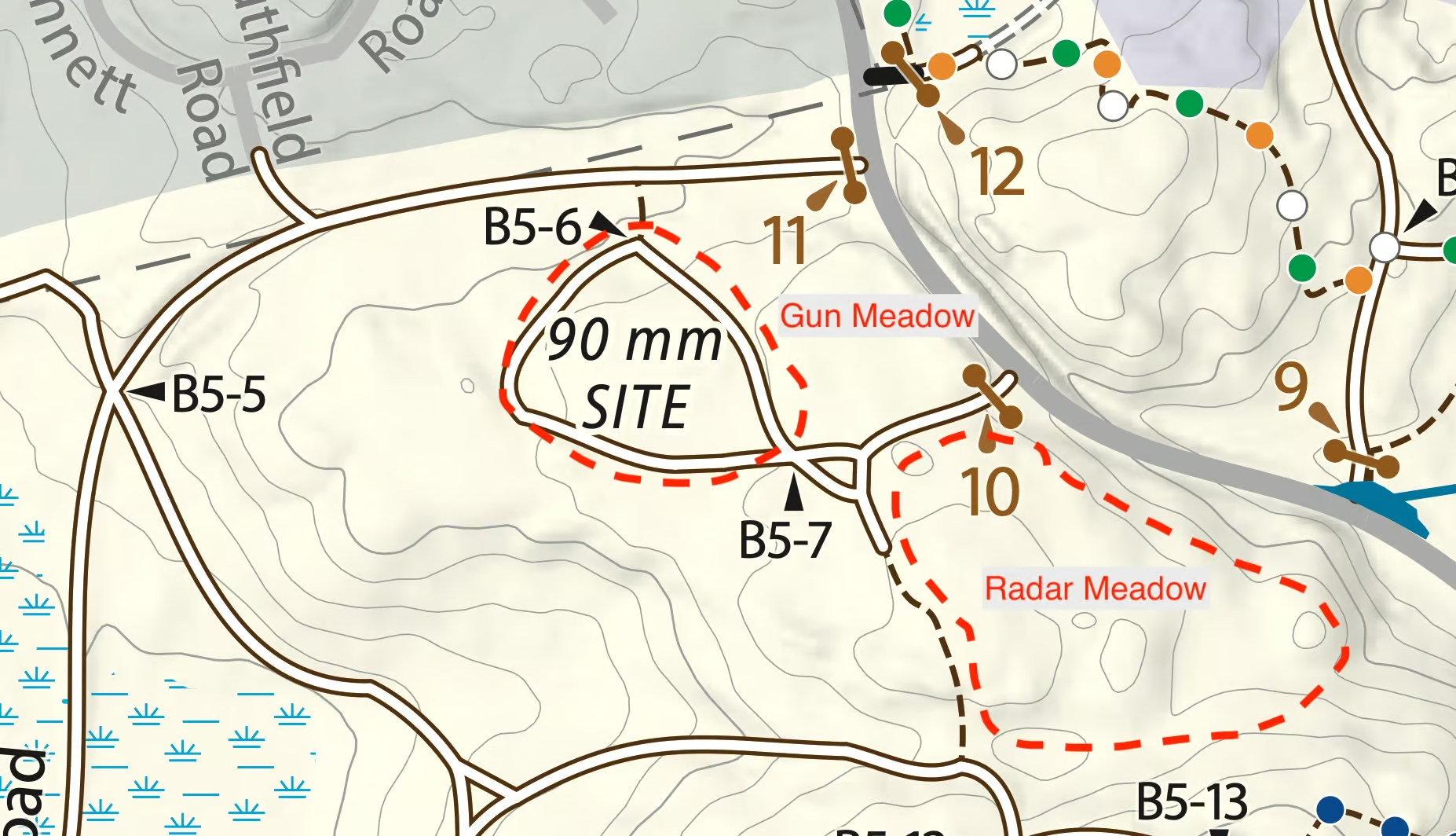
Why This Meadow Matters
When it was documented in the 1980s, the 90mm meadow was considered the richest butterfly habitat anywhere inside Route 128, due to the convergence of open rocky meadow, wetlands, and forest edge, which provided diverse and abundant nectar sources. Experts have documented exceptional diversity here, including 67 butterfly species documented during the 1980s, some of which were rarely found elsewhere in eastern Massachusetts.
Over the past several decades, however, much of this meadow has been lost to natural forest succession and aggressive invasive plants. Today, only two core meadow areas remain, and without intervention, they are at risk of disappearing entirely. Meadow habitat is scarce in the Fells, making restoration here both ecologically important and strategically appropriate. Meadow and grassland species – birds, butterflies, bees, and others – are among those most under threat in Massachusetts. These species once relied on periodic fires and agricultural land clearing to maintain their open, grassy habitat. With land development by humans, suppression of the natural fire cycle, and the decline of agriculture in the Northeast, most of the meadows and grasslands that these species once called home have disappeared, and populations have declined dramatically in the past few decades. At least two of the butterfly species documented in the 90mm meadow in the 1980s (Northern Hairstreak and Roadside Skipper) have since disappeared from the Fells entirely. Restoring this meadow provides habitat for these species, helping to reverse population decline and protect them from extinction.
Preserving this habitat also honors hard-won conservation gains. In 2018, a proposal to construct an ice rink on this site was denied, safeguarding its ecological value. Allowing the meadow to disappear now would undermine that effort.

What is the history of this site?
The 90mm Meadow is a human-created meadow that dates back to the incorporation of the Lawrence Woods into the Middlesex Fells in 1925. At that time, it was used as a woodlot, a shared space where local residents cut wood for fireplaces and cast-iron stoves. During the Korean War, it was leased to the US Army for use as an anti-aircraft artillery site, part of a ring of defenses surrounding Boston. The four 90mm M1 guns that were stationed in the meadow are the origin of its name. After the base was dismantled in 1958, the land was returned to the park and soon became a thriving meadow habitat and a popular site for butterfly-watching.
By looking at historical imagery of the meadow, we can see how the open space has been gradually replaced by early successional forest in the years since the base closed. Trees that are well-represented elsewhere in the Fells, including the invasive Norway maple, have covered most of the original meadow. In addition, large parts of the remaining open space have been colonized by invasive plants, which have killed off native vegetation, damaged soil, and turned colonized areas into ecological dead zones with minimal food and habitat value for native wildlife. Unless active measures are taken to remove invasive plants, restore native ones, and reopen portions of the meadow, the remaining open space will be lost, and this unique habitat will disappear.
How will the meadow be restored?
Project activities will address our goals of ecological restoration, enhanced safety and public access, and educational resources.

Large sections of the “gun meadow” are covered by Asian Bittersweet (C. orbiculatus) and Black Swallow-wort (C. louisiae). Asian Bittersweet vines strangle trees while Black Swallow-wort is toxic to the Monarch Butterfly.
Invasive Plant Remediation
Meadow Clearing and Restoration
Trail and Site Improvements
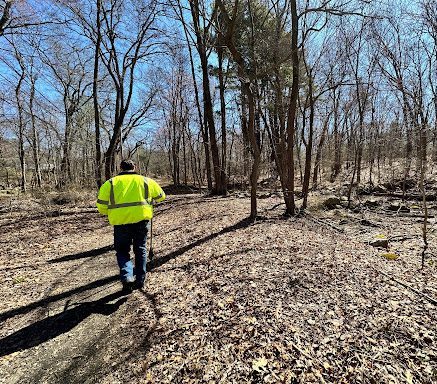
What will happen this year?
- April-May 2026: Wetland delineation, permitting, and site preparation
- June-July 2026: Initial invasive treatments, closure and redirection of informal trails
- August-September 2026: Follow-up treatments, potential meadow clearance work
Depending on the needs of the project, the timelines of specific work items may shift.
What is the timeline beyond this year?
Friends of the Fells volunteers and staff will monitor the 90mm restoration site and collect data to assess progress on restoration work and changes to the ecosystem. We expect to contract Essex Horticultural again for follow-up work on invasive plants next year and have factored this into the budget for this project. Ongoing monitoring and data collection will determine whether professional treatment will be required in the following years.
Once invasive plants can be controlled by manual cutting and pulling, follow-up work will shift from professionals to volunteers. This will happen faster in some areas of the meadow than others: difficult-to-remove species like Japanese knotweed (F. japonica) and Black swallow-wort (C. louiseae) will very likely need to be managed professionally for at least two to three years before they can be successfully managed by volunteers.
In future years, FOF will also explore the possibility of removing or breaking up the dilapidated asphalt in the western wooded section of the meadow, which provides no useful trail and would allow for tree canopy regrowth if removed.

What will visitors see?
Visitors to the meadow may notice:
- Professional crews, including vehicles, treating or and removing invasive plants
- Volunteers performing monitoring and documentation work
- DCR personnel observing the site
- Clearly marked areas where herbicide has been applied
- Temporary informational signage explaining the work
- Closed or redirected informal trails
- Areas of newly opened meadow
- In time, more butterflies and birds!
Long-term Stewardship
Restoring and preserving this rare habitat is a multi-year commitment. Friends of the Middlesex Fells is committed to ongoing work with the DCR, vendors, and volunteers to monitor the meadow and perform the necessary maintenance to keep it open and healthy. We expect to see the dieback of invasive plants and the reclamation of space by native ones, and hope for the return of butterflies and other pollinators to the meadow.
Our Partners
-
Friends of the Middlesex Fells is funding, managing, and stewarding the project, including public communication, arranging annual follow-up work, and conducting ongoing monitoring.
-
Massachusetts DCR is an active partner, assisting the Friends in planning and securing approval for this project, and providing oversight and ongoing consultation. Friends of the Fells will seek future collaboration with DCR on the site to enhance and protect the meadow.
-
Essex Horticulture is an ecological restoration and enhancement consulting company and was selected for this project through a competitive process. Essex will perform specialized restoration work required at this site, including invasive plant treatment and removal, trail closures, and seeding of native species. They have previously worked with the DCR and other organizations like the Trustees of Reservations.