
by Andrea Robles
The Friends of the Fells hosted its second annual Native Land Learning Series, an Indigenous land stewardship initiative made possible by the Freedom’s Way Heritage Area Grant Partnership. The Native Land Learning Series featured Massachusetts-based Indigenous educators Brad Lopes and Elizabeth James Perry from the Aquinnah Wampanoag Tribe of Gay Head.
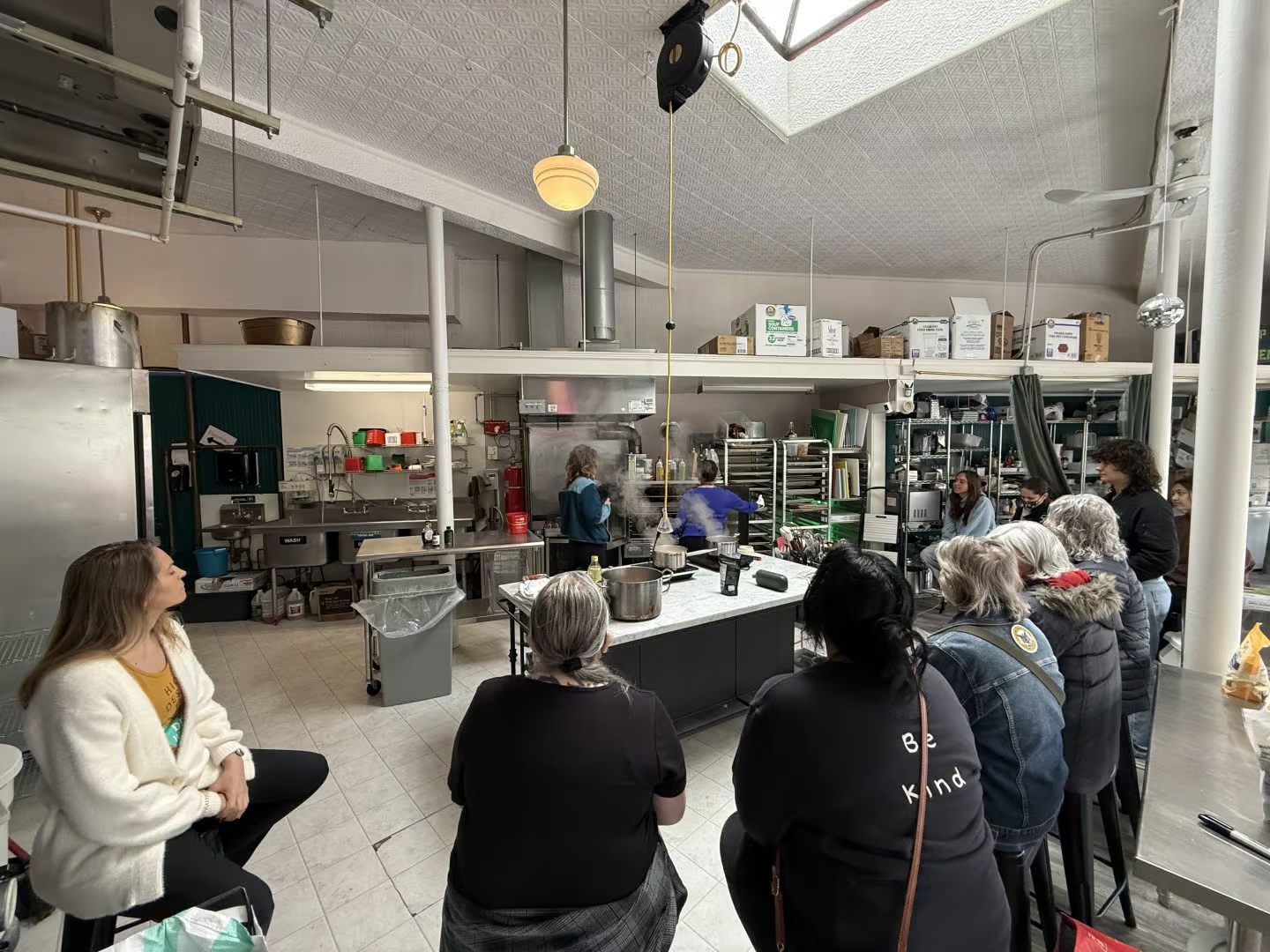
The program commenced on Sunday, April 26th at ‘The Kitchen’ in Melrose with an Indigenous Cuisine Workshop led by Elizabeth James-Perry. Elizabeth is an Aquinnah Wampanoag culture bearer, educator and wampum shell and bead-making artist, particularly focused on connections to identity, sovereignty, maritime traditions, and restorative Native gardening. To learn more about Elizabeth and her artwork, please visit elizabethjamesperry.com.
Elizabeth made a traditional staple meal of duck with wild rice, pinto beans, succotash and cornmeal dumpling, highlighting the nutritional value, cultural significance and close alternatives of each ingredient. She explained how succotash originally comes from an Indigenous word for “three sisters”, which includes corn, beans and squash, making it a complete protein. The duck was seasoned with hickory syrup, sunflower oil, and splashed with a bit of cranberry. For dessert, Elizabeth made cornmeal dumplings made of black walnut mix and harvested cranberries, topped with maple syrup for sweetness.

During the program, Elizabeth shared the importance of growing, harvesting and sharing food, especially with ramps. She explained the art of identifying food sources in the woods, and understanding when a plant is in season. Elizabeth also discussed how some tribes use prescribed burns to maintain meadows that support ground-nesting birds, an important method for harvesting quail eggs. She also shared staple ingredients for the tribal celebration of strawberries, including sassafras, elderberry flower, and black birch teas paired with strawberry bread. The program concluded with a taste test, allowing participants to share a meal together and connect with Elizabeth. Artwork was available for purchase at the end of the event.
On Sunday, May 3rd, Elizabeth led another workshop focused on the art of natural dye. Participants learned how natural elements such as madder root, logwood, osage orange, and black walnuts can be used to create beautiful dyes. Elizabeth prepped each dye by heating up large pots to boiling point, which allowed the earthy compounds to extract rich dyes. She shared the background and artistic use of each dye, and used aluminum and iron mordants to intensify the colors and allow the dye to bind stronger onto fabric fibers. For example, common madder is an herbaceous, perennial plant belonging to the coffee family in Eurasia. The madder roots produced a rosy color, and turned a rich red when mixed with a mordant. Elizabeth also explained how some earthy compounds can turn different colors when varying amounts of mordant are applied. Logwood is a type of tree in the legume family native to Central America and the Caribbean. It naturally yields a rich purple color, but turns into various depths of black under an aluminum influence. Throughout the workshop, Elizabeth experimented with the dyes and colored 100% fiber cottons including socks, t-shirts, scarfs, and bandanas. Participants were able to take home their favorite fiber dyed in their color of choice. Elizabeth also brought her artwork and jewelry to display for sale.
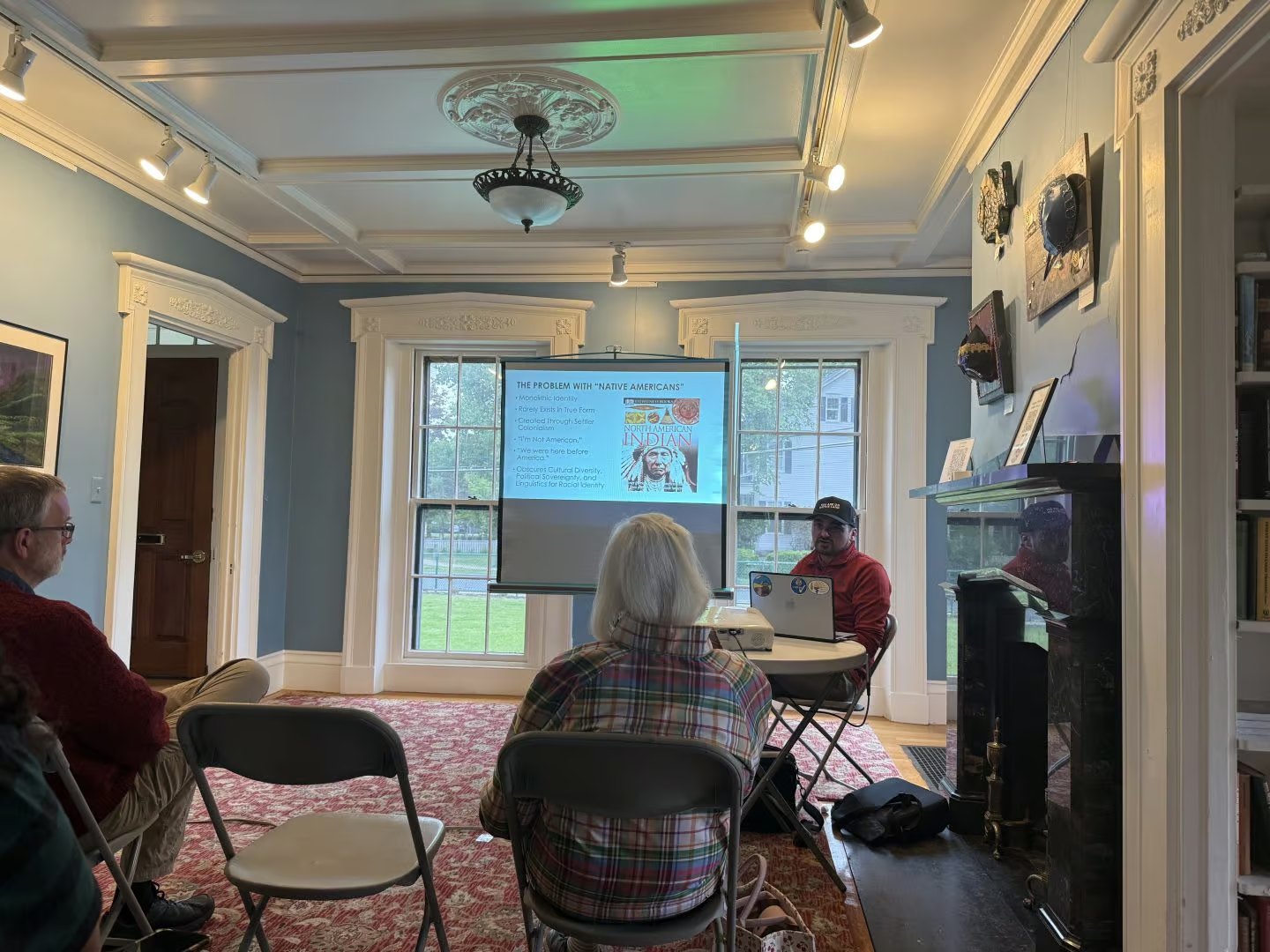
Brad Lopes is a citizen of the Wampanoag Tribe of Gay Head Aquinnah, where he serves as the Education Manager for the Wampanoag Tribe of Gay Head (Aquinnah) and the Education and Public Program Coordinator for the Aquinnah Cultural Center. His work focuses on storytelling sovereignty; emphasizing the ways in which dominating settler narratives of history and historiography have shaped largely impartial understandings of the past. To learn more about Brad and his work, please visit https://www.aquinnah.org/team/brad-lopes.
On May 22nd, Brad Lopes delivered an educational lecture titled “Creating and Uncreating Native Americans: In Literary Traditions,” which explored how literature has shaped the non-Native public’s understanding of Indigenous identity from the 15th century and onward. Brad examined how the question “What is a Native American?” often reveals misconceptions and false understandings, including associations to specific imagery, objects, and traditions. He explained how European and American narratives ignored the various Indigenous cultures, languages, and sovereignty, leading to the creation of a false and large monolithic identity. Brad highlighted a study that found that 90% of manuscripts reviewing Native Americans weren’t actually written by Indigenous peoples themselves. He also explored the impacts of colonization such as racialization, supremacy of colonial accounts, and epistemicide, including the harmful stereotypes and tropes used in post 19th century contemporary trends in romance novels. Brad concluded the program by sharing the importance of recognizing Indigenous sovereignty and agency, and taking some time to answer questions from the audience.
The Native Land Learning Series is an educational program that partners with Massachusetts-based Indigenous educators to empower their voices, foster a cross-collaboration learning environment, and acknowledge their deep contributions. Through the indigenous cuisine, natural dye, and educational lectures and workshops led by Brad Lopes and Elizabeth James-Perry, 30 participants gained new meaningful experiences and learned about indigenous culture, traditional ecological knowledge, and history. This series was made possible by the Freedom’s Way Heritage Area Partnership Grant.